
Depression vs. Bipolar Disorder: When Mood Symptoms Overlap
Depression and bipolar disorder can look nearly identical on the surface. Both involve periods of deep sadness, low energy, loss of interest, sleep disruption, and difficulty functioning. If you’re in a depressive episode, it can feel exactly the same regardless of which condition is causing it.
But underneath that shared surface, these are fundamentally different conditions that require fundamentally different treatments. This isn’t just a technical distinction. The wrong diagnosis can send treatment in the wrong direction entirely.
Why the Distinction Matters So Much
Here’s the critical issue: the standard treatment for depression, namely antidepressant medication, can actually make bipolar disorder worse. Antidepressants used alone in someone with bipolar disorder can trigger manic episodes, rapid cycling between mania and depression, or a destabilizing mixed state where you experience symptoms of both simultaneously.
This means that a person with undiagnosed bipolar disorder who is treated only for depression may feel worse over time, not better. They may go through multiple antidepressants that don’t seem to work, not realizing that the medication itself is part of the problem. Studies suggest that bipolar disorder is misdiagnosed as depression in up to 40% of cases initially, and it takes an average of 5 to 10 years to get an accurate bipolar diagnosis.
That’s why Montana takes extra care with mood disorder evaluations. He’s not just looking at how you feel right now; he’s looking at your full mood history.
How Depression Presents
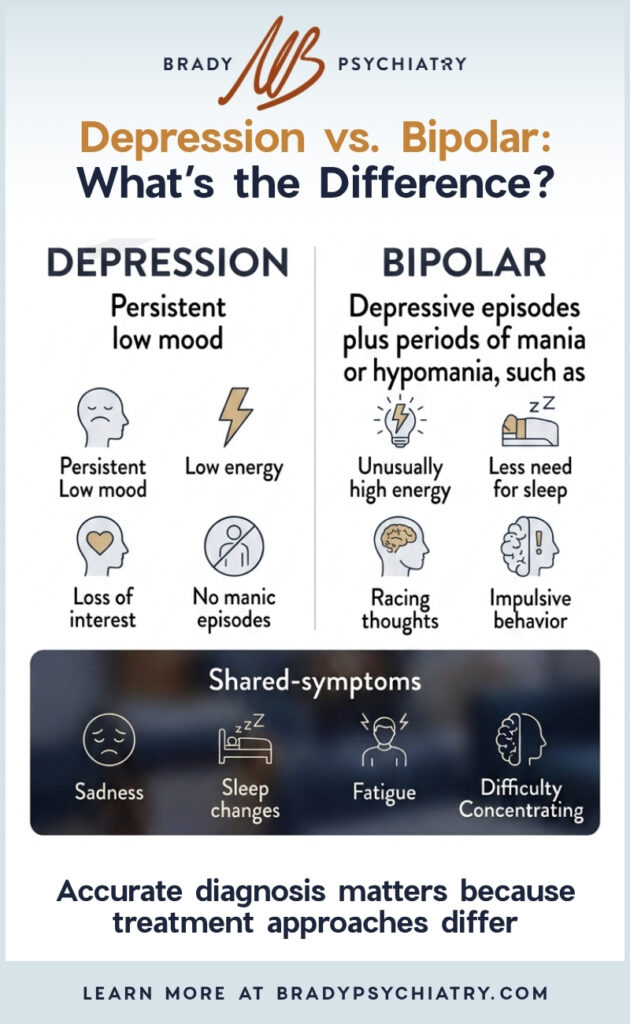
Major depressive disorder (MDD) involves persistent low mood lasting at least two weeks. Symptoms include sadness, loss of interest in activities, changes in sleep and appetite, fatigue, difficulty concentrating, feelings of worthlessness or guilt, and in severe cases, thoughts of death or suicide.
The key characteristic of depression is that it’s unipolar: mood moves in one direction, down. There are no periods of abnormally elevated mood, increased energy, or decreased need for sleep. When you feel “normal,” you just feel like yourself. There’s no swing to the other extreme.
How Bipolar Disorder Presents
Bipolar disorder involves two poles: depression and mania (or its milder form, hypomania). The depressive episodes look virtually identical to MDD. What sets bipolar apart is the presence of manic or hypomanic episodes.
Mania can include:
- Elevated or irritable mood lasting days or weeks.
- Significantly decreased need for sleep (feeling rested after two or three hours).
- Racing thoughts and rapid speech.
- Grandiose thinking or inflated self-esteem.
- Increased goal-directed activity, like starting multiple projects simultaneously.
- Impulsive or risky behavior: spending sprees, risky sexual behavior, reckless driving.
- Distractibility and difficulty focusing.
Hypomania (seen in Bipolar II) involves the same symptoms but less severe. People in a hypomanic episode may actually feel great: more productive, more social, more creative. That’s partly why Bipolar II is so frequently missed. The patient comes in during a depressive episode, describes their symptoms, and gets treated for depression. The hypomanic periods aren’t reported because they didn’t feel like a problem.
Questions Montana Asks to Tell the Difference
During your evaluation, Montana will dig into areas that help distinguish between the two:
- Have you ever had a period of days or weeks where you felt unusually energized, needed significantly less sleep, or felt on top of the world?
- Have people ever commented that you were talking faster than usual or seemed unlike yourself?
- Have you gone through periods of increased productivity or creativity that were noticeably different from your baseline?
- Have you made impulsive decisions during elevated moods that you later regretted?
- How have you responded to antidepressants in the past? Did they make you feel agitated, wired, or worse?
- Does bipolar disorder run in your family?
These questions aren’t always easy to answer, especially if hypomanic episodes felt good at the time. But they’re essential for getting the diagnosis right.
Treatment Differences
Depression is typically treated with antidepressants (SSRIs, SNRIs, or other classes), psychotherapy, and lifestyle modifications. Many people respond well within weeks to months.
Bipolar disorder requires a different approach. The foundation of treatment is mood stabilizers like lithium, valproate, or lamotrigine, sometimes combined with atypical antipsychotics. If antidepressants are used at all, they’re used cautiously and always alongside a mood stabilizer. The goal is preventing both manic and depressive episodes.
Both conditions benefit from psychotherapy, good sleep habits, stress management, and regular follow-ups. But the medication strategy is fundamentally different, which is why the diagnosis matters so much.
What to Do If You’re Not Sure
If you’ve been treated for depression but haven’t responded well to antidepressants, or if you’ve noticed periods of unusually high energy or productivity between depressive episodes, it’s worth getting a thorough evaluation. Montana specializes in careful mood disorder assessment and will take the time to get the diagnosis right.
An accurate diagnosis isn’t just a label. It’s the difference between a treatment plan that works and one that doesn’t.