
You can’t sleep. Your mind races. You feel on edge constantly, startled by things that shouldn’t bother you. You avoid certain places, situations, or even conversations because something about them makes your chest tighten and your body lock up.
Is it anxiety? Is it PTSD? From the inside, they can feel almost identical. Both involve fear, hyperarousal, avoidance, and difficulty functioning. But PTSD and anxiety disorders are distinct conditions with different causes, different clinical features, and different treatment approaches. Getting the distinction right matters because the most effective path forward depends on what’s actually driving your symptoms.
The Core Difference: Trauma
The fundamental dividing line is trauma. PTSD develops in response to a specific traumatic event or series of events: combat, sexual assault, a serious accident, childhood abuse, witnessing violence, a natural disaster, or any experience where you felt your life or safety was in serious danger.
Anxiety disorders, by contrast, don’t require a triggering trauma. Generalized anxiety disorder (GAD), social anxiety, and panic disorder can develop gradually without a single identifiable cause. They’re often driven by a combination of genetics, brain chemistry, personality, and life circumstances.
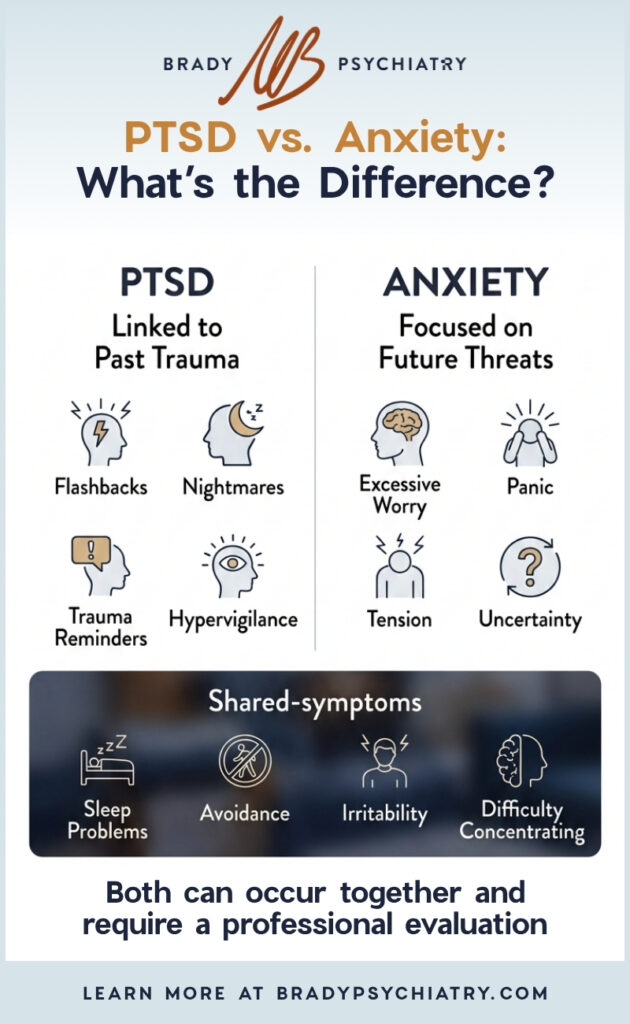
This doesn’t mean that anxiety can’t be triggered by stressful events. It absolutely can. The difference is in the nature of the response. Anxiety is characterized by excessive worry about future events. PTSD is characterized by intrusive re-experiencing of past events.
How PTSD Presents
PTSD has four symptom clusters, and a diagnosis requires symptoms from each:
Intrusive re-experiencing. This is the hallmark of PTSD. Flashbacks where you feel like the trauma is happening again. Nightmares about the event. Intrusive, unwanted memories that come without warning. Intense emotional or physical reactions when something reminds you of the trauma.
Avoidance. Deliberately avoiding anything associated with the trauma: places, people, conversations, activities, or even internal thoughts and feelings related to the event. This can shrink your world significantly over time.
Negative changes in thinking and mood. Persistent negative beliefs about yourself or the world (“I’m broken,” “No one can be trusted”). Feeling detached from others. Loss of interest in activities you used to enjoy. Difficulty experiencing positive emotions. Distorted guilt or blame about the event.
Hyperarousal. Being easily startled. Hypervigilance, constantly scanning for danger. Irritability or angry outbursts. Difficulty concentrating. Sleep disturbance.
PTSD symptoms typically begin within three months of the trauma, though they can surface years later. They must last more than one month and cause significant distress or functional impairment to meet diagnostic criteria.
How Anxiety Disorders Present
Anxiety disorders share some symptoms with PTSD, particularly hyperarousal, sleep difficulty, and avoidance, but the core experience is different:
Generalized Anxiety Disorder (GAD) involves chronic, excessive worry about multiple areas of life (work, health, family, finances, daily responsibilities) that’s difficult to control. The worry is disproportionate to the actual likelihood or impact of the feared events. Physical symptoms include muscle tension, fatigue, restlessness, and difficulty concentrating.
Panic Disorder involves recurrent, unexpected panic attacks, sudden surges of intense fear with physical symptoms like racing heart, shortness of breath, chest pain, dizziness, and a sense of impending doom. People often develop a fear of future attacks, which can lead to avoidance of situations where attacks have occurred.
Social Anxiety involves intense fear of social situations where you might be judged, embarrassed, or scrutinized. It goes beyond normal nervousness and can make everyday interactions like meetings, phone calls, or eating in public feel overwhelming.
The key distinction: anxiety disorders are forward-looking. The distress is about what might happen. PTSD is backward-looking. The distress is about what already happened and the brain’s inability to process it as a past event.
Where They Overlap
The reason PTSD and anxiety are so often confused is that they share significant symptom overlap:
- Sleep disruption appears in both.
- Hypervigilance and exaggerated startle response occur in both.
- Avoidance behavior is common to both.
- Difficulty concentrating affects both.
- Irritability and emotional reactivity cross both conditions.
It’s also possible, and common, to have both. Many people with PTSD also develop generalized anxiety or panic disorder. When conditions co-occur, untangling which symptoms belong to which diagnosis requires careful clinical evaluation.
Why the Distinction Matters for Treatment
Both PTSD and anxiety disorders respond to treatment, but the approaches differ in important ways.
Anxiety disorders are typically treated with SSRIs or SNRIs, cognitive behavioral therapy (CBT), and lifestyle modifications. The therapy focuses on challenging distorted thinking patterns, reducing avoidance, and building tolerance for uncertainty.
PTSD treatment often includes the same medications, but the therapy component is different. Trauma-focused therapies like CPT (Cognitive Processing Therapy) and PE (Prolonged Exposure) directly address the traumatic memory. The goal is to help the brain process the trauma so it stops generating the alarm-level responses. Standard CBT for anxiety doesn’t address trauma processing and may miss the root cause.
This is why diagnosis matters. If someone with PTSD is treated only for anxiety, the underlying trauma remains unprocessed. They might get some relief from medication, but the intrusive memories, nightmares, and trauma-related avoidance will persist.
What Montana Looks For
During your evaluation at Brady Psychiatry, Montana will ask about both your current symptoms and your history. He’ll explore whether there’s a traumatic event at the root of your distress, how your symptoms manifest, and whether you’re experiencing the re-experiencing and negative cognitive changes that distinguish PTSD from anxiety alone.
He’ll also assess for co-occurring conditions, because if both PTSD and an anxiety disorder are present, the treatment plan needs to address both.
Taking the First Step
Whether it’s PTSD, anxiety, or both, what you’re experiencing is real and treatable. You don’t need to diagnose yourself before making an appointment. That’s Montana’s job. What matters is that you recognize something isn’t right and you’re ready to understand what’s happening.